Kane County Drug Rehabilitation Court Celebrates Four Graduates
This month, Kane County Drug Rehabilitation Court (DRC) celebrated four graduates who finished one of the justice system's toughest programs. Now in its 26th year, DRC is a voluntary program for high-risk people with substance use disorders. Participants plead guilty, pay restitution, and receive the strictest probation. They must complete all recommended treatment, work or go to school, take drug tests with little notice, appear in court weekly at first, and often change their routines and social circles. The program usually lasts 24 to 36 months. Graduates often say it isn't a second chance handed to them, but a structure they had to build themselves. "Drug rehabilitation court did not magically fix my life," said Mark, who finished probation successfully for the first time. "What it did was give me the opportunity and the accountability to start fixing it myself."
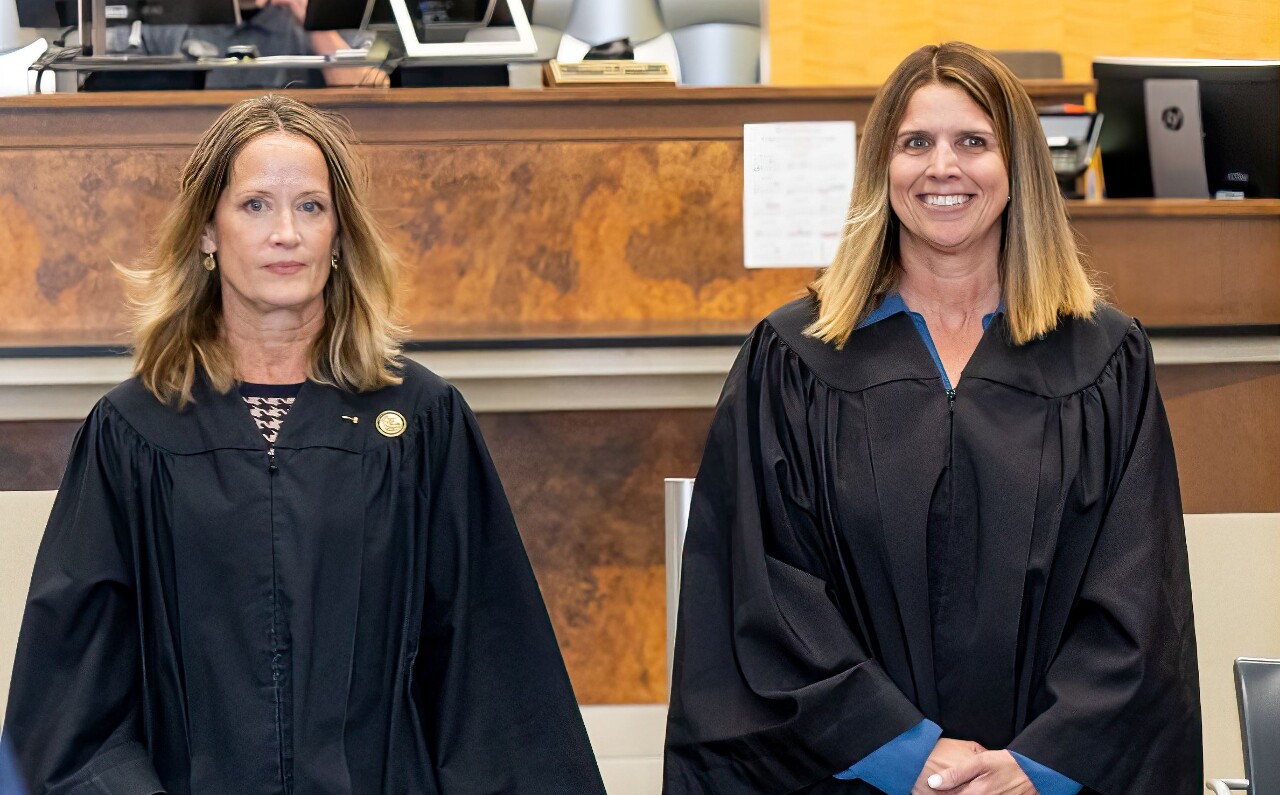
A multidisciplinary team, led by Judge Christine Downs of the 16th Judicial Circuit, provides this accountability. The DRC team includes treatment partners, probation officers, law enforcement, a forensic psychologist, a program coordinator, and attorneys from both the State's Attorney's and Public Defender's offices. "I am so excited for the futures of these graduates," Judge Downs said. "They have worked so hard to make real and lasting change in their lives, are contributing members of our community, and have the tools to live law-abiding lives in recovery." During the graduation, she thanked the Kane County Board, Sheriff's Office, Circuit Clerk, Court Services, Diagnostic Center, and local police for their support. She also highlighted the Kane County Specialty Courts Foundation, whose funding covers important services and incentives that taxpayer money does not. Community partners like Serenity House and the court's peer recovery specialists were also recognized. This kind of support helped graduates like Mark, who struggled with addiction for decades, reach a new understanding: "Most of all, I am proud to admit, I no longer find drugs and alcohol the answer to everything. I found out they're the answer to nothing."
Chief Judge-elect Elizabeth Flood gave the ceremony's opening remarks on behalf of Chief Judge Villa. With nearly 31 years in the court system, including time as a prosecutor during the 1990s "war on drugs," Judge Flood said treatment courts are one of the justice system's most important changes. "Addressing the cause of criminal behavior is more effective than simply punishing it. This takes more work, but the rewards are also greater, more lasting, and improve our entire community." Speaking to the graduates and their families, she added, "No one gets to this stage without days of doubt, fear, exhaustion, hard work, and the support of friends and family. You're making our justice system and our community stronger."
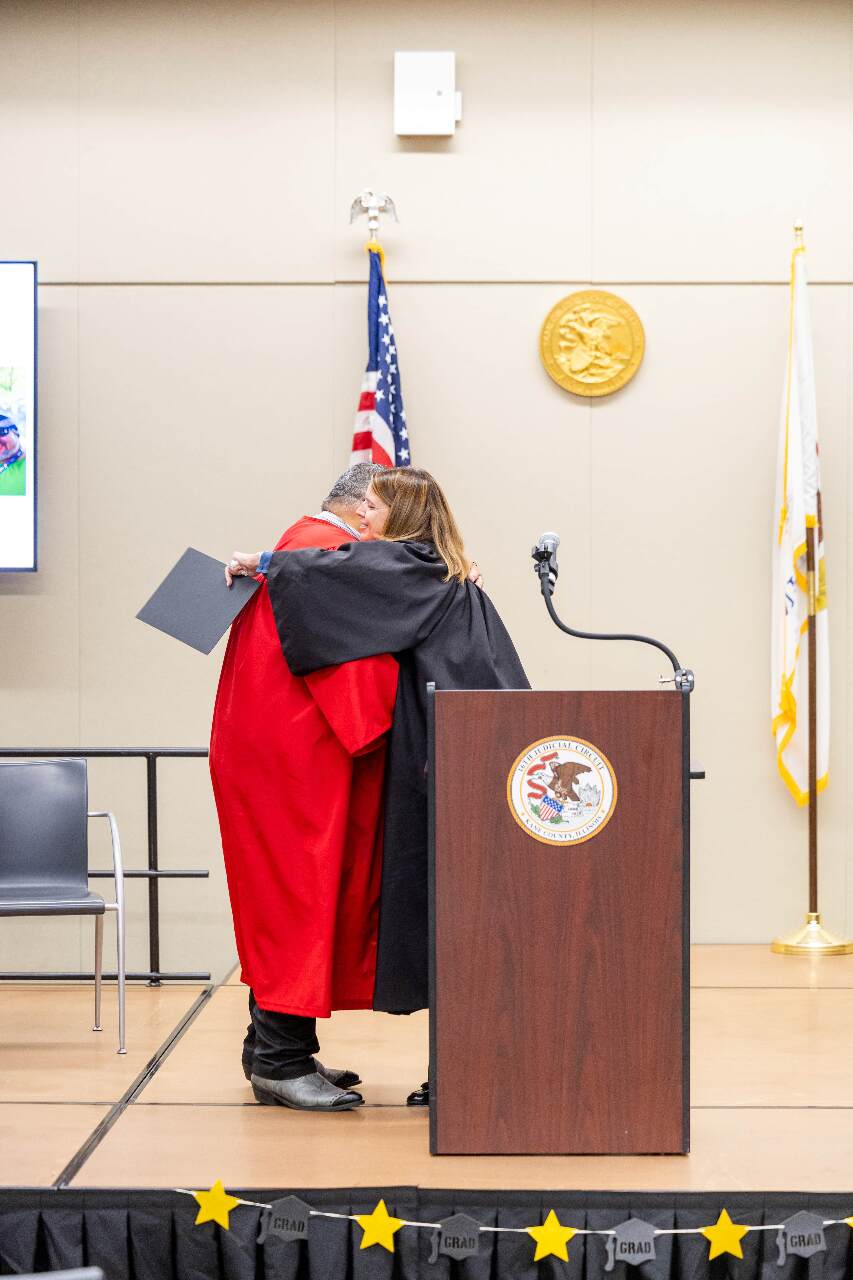
Each graduate received a certificate, their court orders, and a challenge coin from their probation officer. In recovery, sobriety coins mark time without substances, while challenge coins have honored first responders and military members for courage and endurance. "Let this be a reminder about what you can do, and that you did do it," Judge Downs told the four graduates. "And no matter where you are in your recovery journey today, don't give up." Christian, one of the participants, shared a similar message with those still in the program. "To anyone who is still fighting addiction, never give up on yourself," he said. "If I can stand here sober and clean, so can you."
The DRC Program's Positive Ripple Effect on the Community
Together, these four DRC graduates faced 44 years in prison. Instead, they paid $1,994.66 in restitution and $3,291.56 in fines and costs, completed about 327 drug tests each, and now all have jobs, pay taxes, and contribute to the community. Some are also continuing their education. In 2026, 19 people have graduated from the DRC program joining over 750 graduates since its inception.
The financial benefits are clear. Housing one inmate in the Illinois Department of Corrections costs $44,828 per year. According to All Rise, treatment courts save taxpayers about $6,000 per participant, and every $1 spent on drug court returns $4 to the community. Recidivism drops by 38 to 50 percent for participants compared to those who do not join such programs. As Judge Downs pointed out, these results consistently outperform both incarceration and standard probation in reducing drug use and helping people return to productive, law-abiding lives.